
Youna Kim
Professor
- Department: Communication, Media and Culture
- Global Communications
- E-mail: ykim@aup.edu
-

See Courses >>
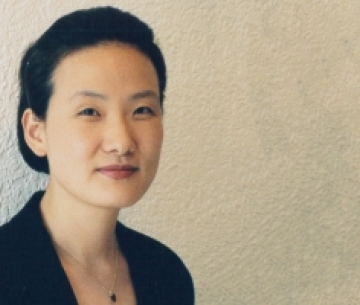
Youna Kim is Professor of Global Communications at the American University of Paris, joined from the London School of Economics and Political Science where she had taught since 2004, after completing her PhD at the University of London, Goldsmiths College. Previously she had worked as a journalist in the USA and taught at Goldsmiths College during the four years of her PhD study before joining the faculty of the LSE and AUP. Her books are Women, Television and Everyday Life in Korea: Journeys of Hope (2005, Routledge); Media Consumption and Everyday Life in Asia (2008, Routledge); Transnational Migration, Media and Identity of Asian Women: Diasporic Daughters (2011, Routledge); Women and the Media in Asia: The Precarious Self (2012, Palgrave Macmillan); The Korean Wave: Korean Media Go Global (2013, Routledge); Routledge Handbook of Korean Culture and Society (2016, Routledge); Childcare Workers, Global Migration and Digital Media (2017, Routledge); South Korean Popular Culture and North Korea (2019, Routledge); The Soft Power of the Korean Wave: Parasite, BTS and Drama (2021, Routledge); Media in Asia: Global, Digital, Gendered and Mobile (2022, Routledge); Introducing Korean Popular Culture (2023, Routledge).
Kim's books have been reviewed in various academic journals including Media, Culture & Society, Feminist Media Studies, Journal of Communication Inquiry, Quarterly Review of Film and Video, Discourse & Society, Women's Studies International Forum, Journal of Women, Politics & Policy, Political Studies Review, Bulletin of the School of Oriental and African Studies, Asian Journal of Communication, Inter-Asia Cultural Studies, Journal of East Asian Studies and the Review of Korean Studies.
Education/Degrees
- PhD, Goldsmiths College, University of London
- MA, University of Colorado, Boulder
- BA, Ewha Woman's University, Seoul
Publications
Books
 Kim, Youna (2005) Women, Television and Everyday Life in Korea: Journeys of Hope. London and New York: Routledge. This book has been reviewed in various academic journals including Media, Culture & Society (2007) Vol. 29(1) 170-171, Feminist Media Studies (2006) Vol. 6(4) 559-561, Political Studies Review (2006) Vol. 4(3) 360-361, and the Review of Korean Studies (2010) Vol. 13(2) 227-231.
 Kim, Youna (ed) (2008) Media Consumption and Everyday Life in Asia. London and New York: Routledge. This book considers the emerging consequences of media consumption in people's everyday life at a time when the political, socio-economic, and cultural forces by which the media operate are rapidly globalizing in Asia. The book has been reviewed and introduced in various sites including Asian Journal of Communication (2010) Vol. 20(4) 496-497, and the Guardian newspaper, UK.
 Kim, Youna (2011) Transnational Migration, Media and Identity of Asian Women: Diasporic Daughters. London and New York: Routledge. This book explores the unstudied nature of diaspora among young Korean, Japanese and Chinese women in the West and challenges the general assumptions of cosmopolitan identity formation as intersected with the media. The book has been reviewed in various academic journals including Journal of Communication Inquiry (2012) Vol. 36(3) 265-268, Inter-Asia Cultural Studies (2013) Vol. 14(3): 468-475, Discourse & Society (2013) Vol. 24(1) 141-143, and Journal of Women, Politics & Policy (2015) Vol. 36(1): 128-131.
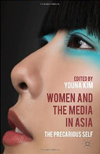 Kim, Youna (ed) (2012) Women and the Media in Asia: The Precarious Self. London and New York: Palgrave Macmillan. At a time of significant changes in women’s lives entering a much larger but precarious world of female individualization, this book explores such phenomena by critically incorporating the parameters of popular media culture into the overarching paradigm of gender relations, economics and politics of everyday life. The book has been reviewed in various academic journals including Women's Studies International Forum (2013) Vol. 38(1) 147-149.
 Kim, Youna (ed) (2013) The Korean Wave: Korean Media Go Global. London and New York: Routledge. This book argues for the Korean Wave’s double capacity in the creation of new and complex spaces of identity that are both enabling and disabling cultural diversity in a digital cosmopolitan world. This book has been reviewed in various sites including Bulletin of the School of Oriental and African Studies (2014) Vol. 77(3): 644-646.
 Kim, Youna (ed) (2016) Routledge Handbook of Korean Culture and Society. London and New York: Routledge. This interdisciplinary book explores the formation and transformation of Korean culture and society; major social phenomena and cultural trends in contemporary Korea.
 Kim, Youna (2017) Childcare Workers, Global Migration and Digital Media. London and New York: Routledge. This book explores the transnational mobility, everyday life and digital media use of childcare workers living and working abroad, and reveals the ways in which digital media empower them but also continue to reinforce existing power relations and inequalities.
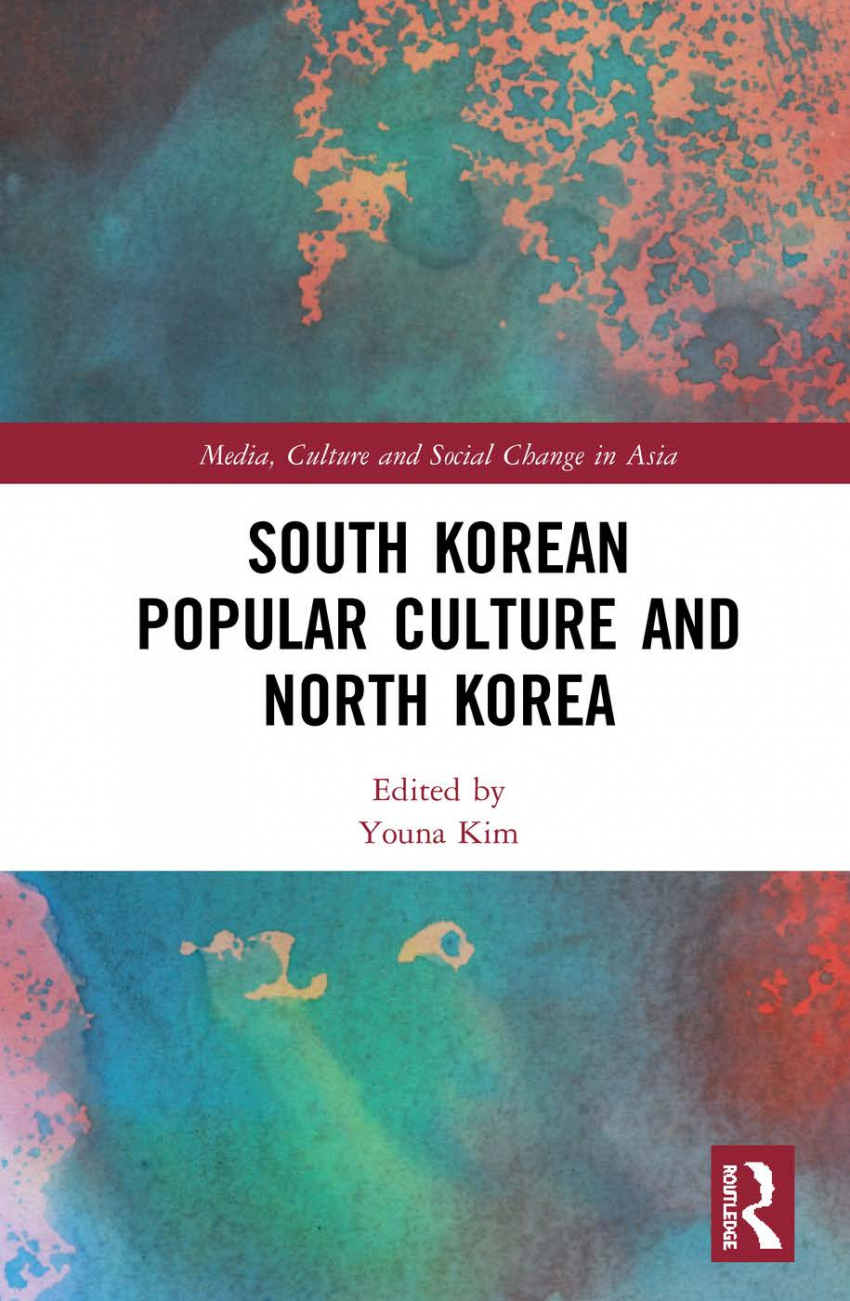 Kim, Youna (ed) (2019) South Korean Popular Culture and North Korea. London and New York: Routledge. This book explores the influence of South Korean popular culture (known as the "Korean Wave" or "Hallyu") in North Korea and demonstrates that the soft power of South Korean popular culture is having an undermining impact on the hard, constraining cultural climate of North Korea. This book has been reviewed in various sites including Journal of East Asian Studies (2019) Vol. 19: 397-398.
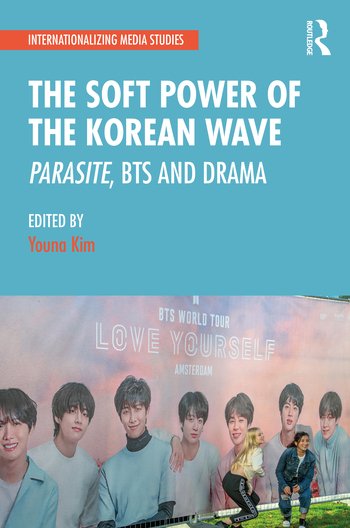 Kim, Youna (ed) (2021) The Soft Power of the Korean Wave: Parasite, BTS and Drama. London and New York: Routledge. Focusing on the most recent phenomenon of Korean popular culture, Parasite, BTS and drama at an unprecedented historic moment, this book explores the multifaceted meaning of the Korean Wave at micro and macro levels and the process of media production, representation, circulation and consumption in a global context as a distinctive and complex form of soft power. This book has been reviewed in Asian Journal of Communication (2022) Vol. 32(6): 551-554.
 Kim, Youna (ed) (2022) Media in Asia: Global, Digital, Gendered and Mobile. London and New York: Routledge. This book demonstrates the media’s centrality to the transforming of contemporary self, culture and society within their unique social contexts of Asia. This book has been reviewed in Quarterly Review of Film and Video (2023) 27 January.
 Kim, Youna (ed) (2023) Introducing Korean Popular Culture. London and New York: Routledge. This book explores Korean popular culture and its historical underpinnings, changing roles and dynamic meanings in the present moment of the digital social media age, by including a wide variety of topics such as K-pop music, cinema, television, webtoon, animation, digital games, esports, the social media, celebrity, fashion, food and lifestyles.
Articles
- Kim, Youna (2005) ‘Experiencing Globalization: Global TV, Reflexivity and the Lives of Young Korean Women’, International Journal of Cultural Studies, Vol. 8(4) 445-463.
- Kim, Youna (2006) ‘How TV Mediates the Husband-Wife Relationship: A Korean Generation/Class/Emotion Analysis’, Feminist Media Studies, Vol. 6(2) 126-143.
- Kim, Youna (2006) ‘The Body, TV Talk and Emotion: Methodological Reflections’, Cultural Studies/Critical Methodologies, Vol. 6(2) 226-244. This article has been ranked in The 50 Most-Frequently Read Articles for the journal (updated monthly).
- Kim, Youna (2007) ‘The Rising East Asian ‘Wave’: Korean Media Go Global’, in Daya Thussu (ed) Media on the Move: Global Flow and Contra-Flow. London and New York: Routledge.
- Kim, Youna (2008) ‘The Media and Asian Transformations’, in Youna Kim (ed) Media Consumption and Everyday Life in Asia. London and New York: Routledge.
- Kim, Youna (2010) 'Female Individualization?: Transnational Mobility and Media Consumption of Asian Women', Media, Culture & Society, Vol. 32(1): 25-43. This article has been ranked in The 50 Most-Frequently Read Articles for the journal (updated monthly).
- Kim, Youna (2011) 'Diasporic Nationalism and the Media: Asian Women on the Move', International Journal of Cultural Studies, Vol. 14(2): 133-151.
- Kim, Youna (2011) 'Female Cosmopolitanism?: Media Talk and Identity of Transnational Asian Women', Communication Theory, Vol. 21(3): 279-298.
- Kim, Youna (2011) 'Globalization of Korean Media: Meanings and Significance', in Do Kyun Kim and Min Sun Kim (eds) Hallyu: Influence of Korean Popular Culture in Asia and Beyond. Seoul: Seoul National University Press.
- Kim, Youna (2012) 'Female Individualization and Popular Media Culture in Asia', in Youna Kim (ed) Women and the Media in Asia: The Precarious Self. London and New York: Palgrave Macmillan.
- Kim, Youna (2012) 'Gender and Asia: Why Study Media Culture?', Inter Asia, Universitat Autonoma de Barcelona, Spain. This article is based on four public talks that Kim has delivered at Universitat Autonoma de Barcelona, Spain in 2012.
- Kim, Youna (2013) ‘Korean Media in a Digital Cosmopolitan World’, in Youna Kim (ed) The Korean Wave: Korean Media Go Global. London and New York: Routledge.
- Kim, Youna (with Joseph Nye) (2013) ‘Soft Power and the Korean Wave’, in Youna Kim (ed) The Korean Wave: Korean Media Go Global. London and New York: Routledge.
- Kim, Youna (2013) ‘Korean Wave Pop Culture in the Global Internet Age: Why Popular? Why Now?’, in Youna Kim (ed) The Korean Wave: Korean Media Go Global. London and New York: Routledge.
- Kim, Youna (2014) ‘Asian Women Audiences, Asian Popular Culture, and Media Globalization’, in Cynthia Carter, Linda Steiner and Lisa McLaughlin (eds) Routledge Companion to Media and Gender. London and New York: Routledge.
- Kim, Youna (2014) 'Soft Power and Cultural Nationalism: The Korean Wave' ('Soft Power et Nationalisme Culturel: La Vague Coréenne'), Outre-Terre (French-language) European Journal of Geopolitics, Paris, Vol. 39: 331-337.
- Kim, Youna (2014) 'The Korean Wave (Hallyu)', Anthropology News (AN), and Society for East Asian Anthropology (SEAA), USA.
- Kim, Youna (2016) ‘Mobile Phone for Empowerment?: Global Nannies in Paris’, Media, Culture & Society, Vol. 38(4): 525-539.
- Kim, Youna (2016) ‘Diasporic Daughters and Digital Media: Willing to Go Anywhere for a While’, Cultural Studies, Vol. 30(3): 532-547.
- Kim, Youna (2016) 'Media and Cultural Cosmopolitanism: Asian Women in Transnational Flows', in Fran Martin and Tania Lewis (eds) Lifestyle Media in Asia: Consumption, Aspiration and Identity. London and New York: Routledge.
- Kim, Youna (2016) 'Digital Diaspora, Mobility and Home', in Koichi Iwabuchi, Chris Berry and Eva Tsai (eds) Routledge Handbook for East Asian Pop Culture. London and New York: Routledge.
- Kim, Youna (2016) 'Korean Culture and Society: A Global Approach', in Youna Kim (ed) Routledge Handbook of Korean Culture and Society. London and New York: Routledge.
- Kim, Youna (2017) ‘Digital Media and Intergenerational Migration: Nannies from the Global South’, Communication Review, Vol. 20(2): 122-141
- Kim, Youna (2017) 'Digital Media for Intimacy?: Asian Nannies' Transnational Mothering in Paris', Journal of International Communication, Vol. 23(2): 1-18.
- Kim, Youna (2017) 'Reception', in Patrick Roessler (ed) The International Encyclopedia of Media Effects. Wiley-Blackwell and the International Communication Association (ICA).
- Kim, Youna (2018) ‘Hallyu: Korean Wave Media Culture in a Digital Age’, in Dal Yong Jin and Nojin Kwak (eds) Communication, Digital Media and Popular Culture in Korea. Lanham: Rowman & Littlefield.
- Kim, Youna (2019) 'Hallyu and North Korea: Soft Power of Popular Culture', in Youna Kim (ed) South Korean Popular Culture and North Korea. London and New York: Routledge.
- Kim, Youna (2019) 'Media and Transnational Mobility of Korean Women', in Yonson Ahn (ed)Transnational Mobility and Identity In and Out of Korea. Lanham: Lexington Books.
- Kim, Youna (2020) ‘Digital Media and East Asian Diaspora’, in Ajaya Sahoo (ed) Routledge Handbook of Asian Diaspora and Development. London and New York: Routledge.
- Kim, Youna (2020) ‘Study Abroad, Media and Digital Diaspora of Korean Women’, in Yoko Kobayashi (ed) Attitudes to Study Abroad among Japanese, Chinese and Korean Women: Motivations, Expectations and Identity. London and New York: Routledge.
- Kim, Youna (2021) ‘Popular Culture and Soft Power in the Social Media Age’, in Youna Kim (ed) The Soft Power of the Korean Wave: Parasite, BTS and Drama. London and New York: Routledge.
- Kim, Youna (2021) ‘North Korea and South Korean Popular Culture in the Digital Age’, in Youna Kim (ed) The Soft Power of the Korean Wave: Parasite, BTS and Drama. London and New York: Routledge.
- Kim, Youna (2022) ‘Introduction: Media in Asia’, in Youna Kim (ed) Media in Asia: Global, Digital, Gendered and Mobile. London and New York: Routledge.
- Kim, Youna (2022) ‘Soft Power and Cultural Nationalism: Globalization of the Korean Wave’, in Youna Kim (ed) Media in Asia: Global, Digital, Gendered and Mobile. London and New York: Routledge.
- Kim, Youna (2022) ‘Transnational Popular Culture’, in Francis Collins and Brenda Yeoh (eds) Handbook on Transnationalism. London: Edward Elgar Publishing.
- Kim, Youna (2022) ‘Hallyu’s Soft Power and Politics’, in Rosalie Kim (ed) Hallyu! The Korean Wave. London: Victoria and Albert Museum.
- Kim, Youna (2023) ‘Situating Korean Popular Culture in the Global Culture Landscape’, in Youna Kim (ed) Introducing Korean Popular Culture. London and New York: Routledge.
- Kim, Youna (2023) ‘The Korean Wave Television: From Winter Sonata to Squid Game’, in Youna Kim (ed) Introducing Korean Popular Culture. London and New York: Routledge.
- Kim, Youna (2024) ‘The Korean Wave: Soft Power in a Digital Age’, forthcoming in Daya Thussu and Sudeshna Roy (eds) The Routledge Handbook of Communication and Media in the Global South. London and New York: Routledge.
Affiliations
Professor Kim has been invited to join the International Editorial Board of the International Journal of Cultural Studies, Communication Yearbook (ICA), Global Media and Communication, and Feminist Media Studies, and the Editorial Board of the International Journal of Social and Political Thought (International Journal of Criminology and Sociological Theory). She reviews book proposals for publishers Routledge and SAGE and serves as a referee for academic journals in the field of media, communications, sociology, cultural and gender studies.
Research Areas
- Sociology of media/culture
- Gender and media globalization
- Korea/Asia
- Media audiences
- Digital media and everyday life
- Transnational migration
- Digital diaspora
- Cultural identity
- Cultural and educational consequences of globalization
- ‘De-westernizing’ media and cultural studies
Kim's research interests include sociology of media/culture, gender and media globalization, Korea/Asia, media audiences, digital media and everyday life, transnational migration, digital diaspora, cultural identity, cultural and educational consequences of globalization, ‘de-westernizing’ media and cultural studies.
(1) Kim's PhD research has been published as a book, Women, Television and Everyday Life in Korea: Journeys of Hope (2005, Routledge), (awarded research funding from the Overseas Research Students Award from the British government). Korea is currently witnessing huge social change with unprecedented divorce rates and the disintegration of the traditional family system. Fusing audience research and ethnography, this research presents a compelling account of women’s changing lives and identities in relation to the impact of the most popular media culture in everyday life - television. Within the historically specific social conditions of Korean modernization it analyzes how Korean women of varying age and class groups cope with the new environment of changing economic structures and social relations. The central arguments presented revolve around the revelatory and self-reflexive nature of TV talk and its function as a form of empowerment. The research argues that television is an important resource for women, stimulating them to research their own lives and identities. It reveals Korean women to be creative, energetic and critical audiences in their responses to evolving modernity and the impact of the West. Based on original empirical research, it explores the hopes, aspirations, frustrations and dilemmas of Korean women as they try to cope with life beyond traditional grounds.
Kim's new research focus is, ‘De-westernizing Media and Cultural Studies: Opportunities, Obstacles and Learning from Experience’. It explores the cultural and educational consequences of globalization and the inevitable deconstruction of western hegemony in our field. This requires our imaginative responses about the possibilities and forms of ‘de-westernization’. In responses to de-westernization, she has been pursuing the following projects:
(2) One is a funded research/book project, Transnational Migration, Media and Identity of Asian Women: Diasporic Daughters (2011, Routledge), (awarded research funding from the Nuffield Foundation and the GB Sasakawa Foundation). Women are travelling out of Korea, Japan and China for very different reasons than those that sent them into diaspora only twenty years ago. From the mid-1980s onward there has been a rising trend of women leaving their country to experience life overseas either as tourists or students, eventually surpassing the number of men engaging in foreign travel. Why do women move? Starting with this question, her ethnographic research explores the unstudied nature of diaspora among young Korean, Japanese and Chinese women living and studying in the West. What are the actual conditions of their transnational lives? How do they make sense of their transnational lives through the experience of media? Are they becoming cosmopolitan subjects? Her research intends to analyze the contradictions of cosmopolitan identity formation and challenge the (Western) assumptions of cosmopolitanism.
(3) Another de-westernization project is the extension of her PhD research and the edition of a collective book, Media Consumption and Everyday Life in Asia (2008, Routledge). Media audiences are now lively discussed but our debates, theories and teaching are often based upon cases of a few Western societies. An enlarged way of thinking is called for – challenging existing paradigms and providing comparative perspectives. In this research, she explores people’s everyday experience of media in Asian countries currently in confrontation with huge social change and transition. Media culture is creating new connections, new desires and threats, and the identities of people are being reworked at individual, national and global levels. Within historically specific social conditions and contexts of the everyday, she seeks to develop a comparative understanding of the place of media consumption and the links and gaps between the experiences of different locations. Consequences will be addressed in relation to questions of identity, generation, class, gender, sexuality, globalization, and de-westernizing media studies.
(4) Another project is a book volume, Women and the Media in Asia: The Precarious Self (2012, Palgrave Macmillan). Women in Asia have gained higher levels of education and the commensurate expectations have become a driving motor in the women’s aspirations for work, economic power, independence, freedom and self-fulfilment. However, women often experience gendered labour market inequity setting limits on patterns of participation, women’s socio-economic position on the margins of work systems, and thus the illusion of the language of choice that the new capacities of education appear to promise. The enlargement of choice can be particularly illusory for women in contemporary Asia where gendered socio-economic and cultural conditions continue to persist and structure labour market outcomes and lifestyles. Yet signs of female individualization have been proliferating as a defining feature of contemporary modes of identity, albeit untenable and ambivalent, within the discursive regime of self – embodied in regulatory practices in society where individualism is not placed at the heart of its culture. Arguably, the media are central to the signs of emergent cultures of female individualization. At a time of significant changes in women’s lives entering a much larger but precarious world, this book explores such phenomena by critically incorporating the parameters of popular media culture into the overarching paradigm of gender relations, economics and politics of everyday life.
(5) Based in Paris, Kim has worked on a new research/book, Childcare Workers, Global Migration and Digital Media (2017, Routledge). Women are now migrating more than ever; nearly half (49%) of the world’s migrants are women. The gendered phenomenon of global women is part of a larger trend described as the feminization of migration, and a consequence that is increasingly shaped by the new economy of globalization and global inequality. Historically, the feminization of migration from Asia has been associated with low-skilled or unskilled migrants, particularly low-paid labour migration of nannies, domestic workers and so on from less developed countries such as Indonesia, Sri Lanka and the Philippines. This contemporary manifestation has been intensified by the proliferation of new media communications, digital technologies and the deregulation in the 1990s creating multi-vocal, multimedia and multi-directional flows. Kim's research explores the often taken-for-granted important role of the transnational media as mundane migratory resources, individualistic and networked relations that affect the circular flow and provisional trajectory, the extended and selective spatiality, the everyday experience and subjectivity of subaltern women on the move.
(6) A new ‘de-westernization’ project is a cutting-edge volume, The Korean Wave: Korean Media Go Global (2013, Routledge). Since the late 1990s South Korea has emerged as a new centre for the production of transnational popular culture – the first instance of a major global circulation of Korean popular culture in history. Why popular (or not)? Why now? What does it mean socially, culturally and politically in a global context? This book considers the Korean Wave in a global digital age and addresses the social, cultural and political implications in their complexity and paradox within the contexts of global inequalities and uneven power structures. The emerging consequences at multiple levels – both macro structures and micro processes that influence media production, distribution, representation and consumption – deserve to be analyzed and explored fully in an increasingly global media environment. This book argues for the Korean Wave’s double capacity in the creation of new and complex spaces of identity that are both enabling and disabling cultural diversity in a digital cosmopolitan world.
(7) Routledge Handbook of Korean Culture and Society (2016) is a timely extension of the previous volume, The Korean Wave: Korean Media Go Global (2013, Routledge). In the Western imagination, Korea was once thought to be sandwiched between Japan and China and known only for exporting cars and electronics products, but now Korea has made itself known through its culture, especially through the Korean Wave popular media culture including K-pop music, TV dramas, films, animation, online games, smartphones, fashion, cosmetics, food and lifestyles. At this fascinating historical moment, this interdisciplinary Handbook is a timely resource for international readers. It explores the formation and transformation of Korean culture and society; major social phenomena and cultural trends in contemporary Korea, ranging from compressed modernity, educational migration, social class and inequality, gender and family change, youth culture, to popular culture and post-colonial subjectivity, digital Korea, Korean diasporic cultures and cosmopolitanism.
(8) South Korean Popular Culture and North Korea (2019, Routledge), (awarded research funding from the Academy of Korean Studies), explores the influence of South Korean popular culture (known as the “Korean Wave” or “Hallyu”) in North Korea and socioeconomic, cultural and political change at this important historical moment. This book considers the significance of popular culture and information technology as a source of soft power, with its potentials and limits, complexity and implications at multiple levels. The Korean Wave has become a cultural resource for the growing mass-mediated popular imagination, which is situated within a broader process of global consumerism and a new sphere of digital culture. In a force of globalization and interdependence, the Korean Wave popular culture can no doubt build a bridge of cultural connectivity and Korea’s strongest form of soft power. This book importantly recognizes an intersection between South Korean popular culture and the mobilization of inner self and possible social change to emerge within communist North Korea, where real-life situations are felt to be particularly constrained and mobility in a variety of capacities and forms becomes all the more important.
(9) The Soft Power of the Korean Wave: Parasite, BTS and Drama (2021, Routledge) is a cutting-edge and timely book. Focusing on the most recent phenomenon of Korean popular culture, Parasite, BTS and drama at an unprecedented historic moment, this book explores the multifaceted meaning of the Korean Wave at micro and macro levels and the process of media production, representation, circulation and consumption in a global context as a distinctive and complex form of soft power. It considers the Korean Wave in the digital social media age and addresses the social, cultural and political implications in their complexity and paradox within the contexts of global inequalities and uneven power structures. The book explores the global success of the Korean Wave as a pronounced example of the crossover of culture, economy and politics and the emerging consequences of the postcolonial, alternative and competing power. The globalization of media content from once subalternized or peripheral nations such as Korea is a facet of de-centralizing multiplicity of global cultural flows today, emerging as subversive soft power resources that challenge the Western hegemony of dominant ideas, values and ways of life.
(10) Media in Asia: Global, Digital, Gendered and Mobile (2022, Routledge) explores the dynamic and complex place of the media in Asia currently in confrontation with remarkable social change and transition and the need to understand this emerging phenomenon as it intersects with the media. It demonstrates the media’s centrality to the transforming of contemporary self, culture and society within their unique social contexts. Asia is at the very forefront of the consumption, circulation and production of digital media culture in the neoliberal era of networked entertainment. New forms of media globalization in Asia need to be recognized as a proliferating, indispensable, yet highly complex and contradictory resource for the construction of identities. Questions of identity are refigured in flows of desire that now operate transnationally, enacted by Asia’s economic growth, digital media technologies and integration into globalization that have enabled new generations of people to imagine and create a different life trajectory. The emerging sociocultural and political consequences at multiple levels deserve to be analyzed and explored fully in an increasingly global, digital, gendered and mobile environment of the media. Drawing on a wide range of perspectives from media and communications, sociology, cultural studies, anthropology and Asian studies, it provides an empirically rich and stimulating tour of key areas of study.
(11) Introducing Korean Popular Culture (2023, Routledge) explores the growing visibility of Korean popular culture as one of the creative and important interventions and contributions to a broadening of understanding that variously considers the experience and culture of society outside the Euro-American world. Drawing on interdisciplinary perspectives from the humanities and social sciences, including media and communications, film studies, musicology, cultural studies, sociology, anthropology, history and literature, this book provides a comprehensive and up-to-date overview of Korean popular culture and its historical underpinnings, changing roles and dynamic meanings in the present moment of the digital social media age. This lively discussion of Korean popular culture explores in depth a wide variety of topics, such as K-pop music, cinema, television, webtoon, animation, digital games, esports, the social media, celebrity, fashion, food and lifestyles. Considering popular culture as a complex terrain on which the politics of identity is played out, it explores the multifaceted meanings of Korean popular culture at micro-macro levels and the processes of cultural production, representation, circulation and consumption in historical and global contexts. As the book will demonstrate, popular culture is an integral resource for the creation of new and complex spaces of identity, social meanings and imaginations deeply embedded in the fabric of society.