
Search
Academics
Fieldwork in a Master’s Program: Dr. Renée Funk’s Research Journey
By Monique Callender
When Dr. Renée Funk arrived at The American University of Paris, she was not beginning her academic journey but continuing it. For 20 years she’d been with the U.S. Public Health Service as a veterinarian and epidemiologist under the U.S. Centers for Disease Control and Prevention (CDC). Having spent decades focused on domestic public health, she wanted to deepen her understanding of international systems and move into a more global health practice.
That decision led her to AUP’s graduate program in International Affairs and, ultimately, to rural Ethiopia, where she conducted extensive field research on livelihood adaptation among pastoralist communities affected by prolonged drought. Supported by the Slosberg Travel Grant, Dr. Funk’s work exemplifies how AUP empowers its graduate students to engage directly with complex global challenges through rigorous, hands-on research.
Dr. Funk’s path to AUP was shaped by both professional experience and personal reflection. Retiring from uniformed service in 2022, immediately following the COVID-19 pandemic, she was ready for a reset. Desiring a more international career but without international experience, she set out to find a way to gain the experience necessary to pivot. She began by searching for programs that accepted the GI Bill. AUP stood out for its emphasis on interdisciplinary thinking and global engagement.
Although Dr. Funk already held two master’s degrees, one in public health and one in business administration, the AUP Master’s in International Affairs offered something distinct. “It was a completely different lens. More political science, more theory, more international context.” That shift proved essential as she began to conceptualize a field-based research project that bridged public health, environmental change, and international development.
Drawing on her professional network, she connected with a colleague at Colorado State University who was collaborating with Vétérinaires Sans Frontières (VSF) Suisse in Ethiopia. The organization works closely with pastoralist communities whose livelihoods depend on livestock and access to natural resources. At the time, those communities were facing a devastating crisis: three consecutive years of drought had led to the loss of approximately 80 percent of their animals.
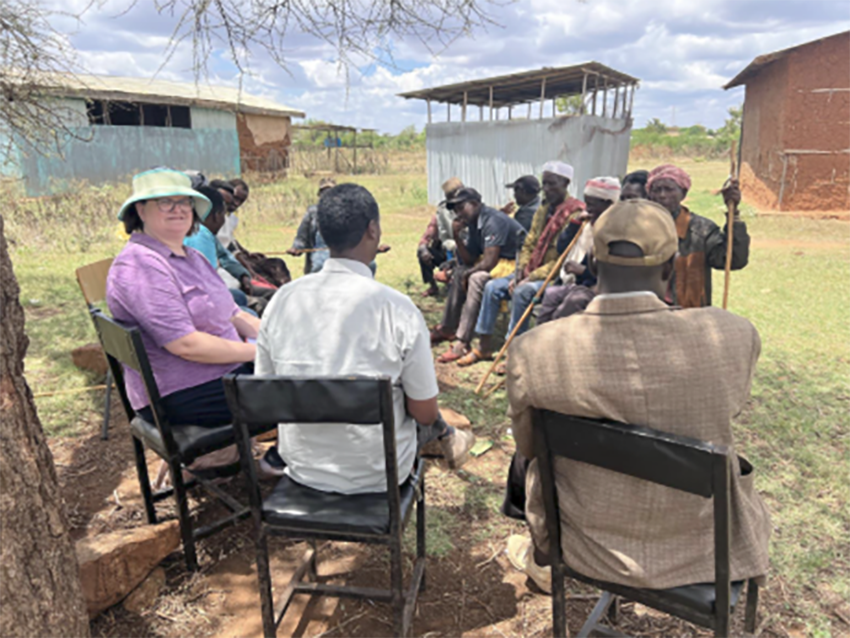
“For pastoralists, livestock are everything. They are income, food security, and savings all at once.” She explains. The scale and duration of the drought meant that traditional coping mechanisms were no longer sufficient. Families were being forced to consider alternative livelihood strategies while trying to preserve their cultural and economic ties to pastoralism.
Dr. Funk spent nearly a year planning her research, including an exploratory trip during spring break that allowed her to refine her focus. Initially interested in environmental health topics such as pesticide use, she quickly realized that the communities’ priorities were far more urgent. “They were in crisis mode. This was about survival and adaptation.”
Her final research centered on how pastoralist communities understand and navigate livelihood change following environmental shock. Through focus groups and in-depth interviews across several villages, Dr. Funk gathered perspectives from men, women, widows, and elderly residents. She was particularly struck by the clarity and pragmatism of the women she interviewed, many of whom articulated detailed and realistic plans for rebuilding their livelihoods through activities such as crop production and beekeeping.
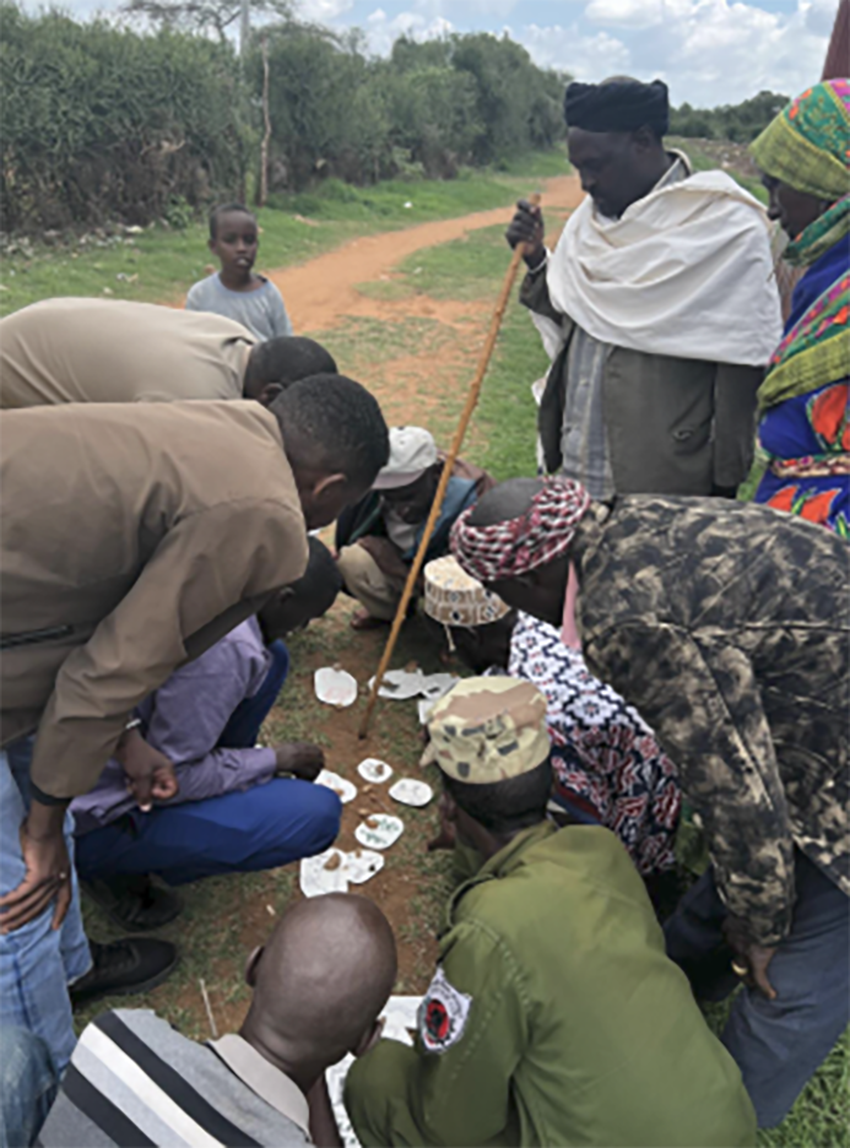
Throughout the project, Dr. Funk applied two major theoretical frameworks: the livelihood adaptation model, widely used in international development, and the One Health framework, which emphasizes the interconnectedness of human, animal, and environmental health. While these frameworks are often treated separately, Dr. Funk’s research demonstrated their deep interdependence in pastoralist contexts.
“Pastoralism is inherently One Health,” she notes. “You cannot separate the health of the people from the health of their animals or the environment they depend on.” Her findings were compelling enough that VSF Suisse expressed interest in applying the combined framework to their future programming.
Dr. Funk (right) and Dr. Kebadu Belay (left), the Director of Vétérinaires Sans Frontières Suisse in Ethiopia
This kind of applied impact reflects AUP’s approach to graduate research. Faculty mentorship played a central role in shaping Dr. Funk’s project. Through AUP’s thesis seminar, she received rigorous training in theory and methodology, ensuring that her fieldwork was grounded in scholarly frameworks. Additional guidance from environmental health specialists helped her navigate qualitative research methods, an area outside her usual quantitative focus.
Equally critical was the Slosberg Travel Grant, which made extended fieldwork possible. Without it, the project would have taken a fundamentally different shape. “I could not have done this research without being in the field and speaking directly with community members. Observing the context and returning multiple times allowed me to understand not just the challenges, but the resilience and creativity that were already there.”
The grant enabled Dr. Funk to spend months conducting interviews, analyzing data on site, and sharing preliminary findings with local partners before returning to Paris. That iterative process strengthened both the research and its relevance to practitioners on the ground.
The experience also reshaped Dr. Funk’s professional trajectory. Following her return, she secured an internship with the World Organisation for Animal Health in Paris, leveraging both her field research and the AUP network. She is now beginning work as an international consultant, continuing to engage with global health and development challenges.
For prospective graduate students, Dr. Funk’s story underscores what is possible at AUP. Field-based research and interdisciplinary inquiry are not treated as exceptions, but as integral to the graduate experience.
Her advice to students interested in similar paths is clear: pursue internships, seek out field opportunities, and remain open to where research questions lead. While not every project will involve international travel, AUP provides the intellectual framework, institutional support, and funding opportunities to help students turn ambitious ideas into meaningful research.
In a world facing interconnected crises, AUP’s commitment to hands-on, globally engaged graduate research is more relevant than ever. Through grants like the Slosberg Travel Grant and faculty mentorship that bridges theory and practice, students are empowered not only to study global challenges, but to contribute to addressing them.